

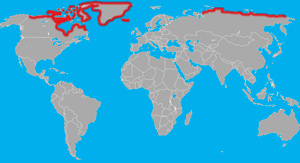

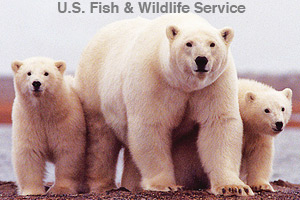
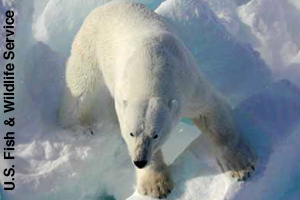
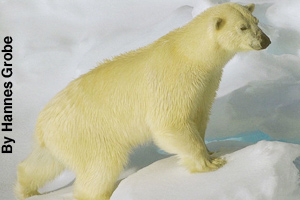

The polar bear is the world’s largest meat eating land animal. But it spends most of its time on sea ice. The skin of this bear is black. A polar bear’s fur keeps it dry and warm. Its fur has no color. It looks white because of the snow.
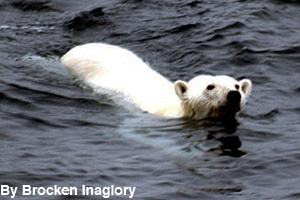
A polar bear is a very good swimmer. It has large front paws. The paws are like paddles in the water. This bear also uses its big paws to safely walk on ice.
This bear needs the animal blubbler, or fat, to live. That is why a polar bear eats mostly seals. Seals have lots of body blubber. Sometimes, the polar bear will find a dead animal. Then it will eat that blubber, too.
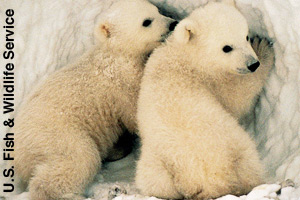
In winter, a mother polar bear digs a snow cave. She hibernates through the winter. If snow covers the cave, that’s good. The snow acts like a blanket for the polar bear. In December, the sow gives birth to two or three cubs. Each cub only weighs one pound at birth! The cubs grow quickly drinking the sow’s milk. A polar bear family will stay in the cave until March or April.
Its thick blubber and fur keep it warm in cold climates. Global warming is a polar bear’s biggest threat. The polar bear needs a cold climate to live. It needs large pieces of sea ice.
Mating, birthing cubs and emerging from dens. (n.d.). Retrieved from https://polarbearsinternational.org/polar-bears/life-cycle/
Polar bear facts & information. (n.d.). Retrieved from https://polarbearsinternational.org/polar-bears
Polar bear. (n.d.). Retrieved from https://www.worldwildlife.org/species/polar-bear
APA Style: Polar Bear. (2020, July). Retrieved from Facts4Me at https://www.facts4me.com
MLA Style: "Polar Bear." Facts4Me. Jul. 2020. https://www.facts4me.com.