
Range (in red) of the mule deer
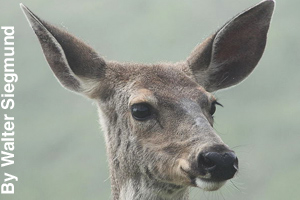
Close-up of a mule deer doe
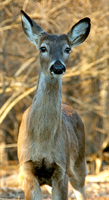
Young mule deer buck
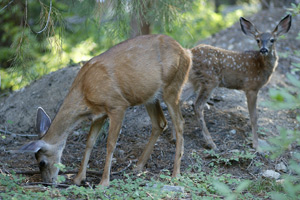
A doe and her fawn
A doe and her fawn
Ears are gray on the outside and white inside
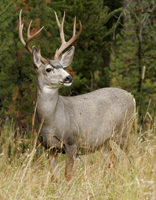
Adult buck mule deer
A mule deer has excellent hearing.
Deer, Mule
Topic(s):   Alpine Animals, Chaparral Animals, Forest Animals, Grassland Animals, Lewis & Clark Animals, Mammals, Mountain Animals, Prairie Animals, Savanna Animals, Woodland Animals
Quick Facts
Type of Animal
mammal
Biome(s)
desert, alpine, chaparral, tundra, desert, savanna
Habitat
woodland, grassland, prairie, forest
Diet
plants, fruits, berries
Male
buck
Female
doe
Baby
fawn
Group
herd, leash, or gang
Life Span
9 to 11 years (wild)
Migrates
yes
Hibernates
no
Predators
people, cougars, wolves
Endangered
no

The mule deer is found all over the western United States. It lives in forests, deserts and shrub woodlands.

A mule deer is dark gray-brown. It has a white rump patch. Its tail is white with a black tip. The ears are large. They look like a mule’s ears. The ears can twist in many directions.

The male mule deer (buck) has large antlers. A buck’s antlers start growing in the spring.The female does not have any antlers.

The female is called a doe. A doe usually gives birth to two baby fawns a year. A fawn is born covered with white spots. The spots help the baby blend in with the ground. This hides it from predators.

A mule deer eats a variety of plant foods. It especially likes acorns, mushrooms and green leaves.

Citation information

APA Style: Mule Deer. (2020, March). Retrieved from Facts4Me at https://www.facts4me.com

MLA Style: "Mule Deer." Facts4Me. Mar. 2020. https://www.facts4me.com.

Back To Previous Back To Top
Copyright © 2006 - 2026, Facts4Me. All rights reserved.