


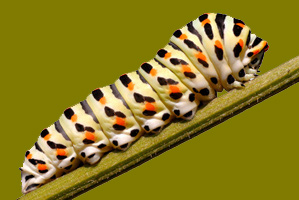

of a butterfly
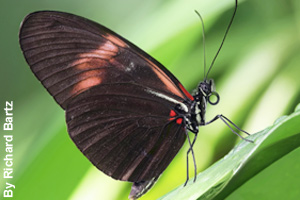
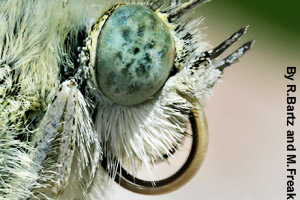
and proboscis

the largest butterfly

A butterfly has four wings. The wings are covered with colorful scales. Butterflies and moths are the only insects that have scaly wings.
Most butterflies fly only during the day. A butterfly needs warm weather. It only flies when it is warm. The sun helps the butterfly stay warm. In cool weather, a butterfly will rest in the sun to warm up.
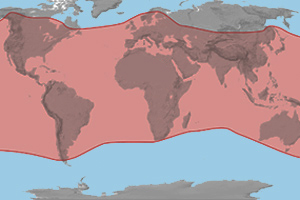
A butterfly is a very good flier. It can fly very long distances. It will fly to warmer areas during cold seasons. This is called migration.
A butterfly lives on nectar from flowers. It also lives on the juice of rotting fruit. It gets its food by using its long tongue like a straw. Its long tongue is called a proboscis. The butterfly unrolls its tongue to sip food. It will then curls up its tongue when not in use.
A butterfly has many enemies. It must protect itself. It might make a predator sick when eaten. The predator learns not to eat that kind of butterfly. This protects other butterflies that look the same.
A butterfly may have wings that look like huge eyes. This tricks predators. The predator thinks that the butterfly is a very large animal. That scares the predator away.
How do you tell the difference between a butterfly and a moth? When the butterfly closes its wings, the wings stick up. When the moth closes its wings, the wings fold down around its body.
All about butterflies. (n.d.). Retrieved from https://www.uky.edu/hort/butterflies/all-about-butterflies
Are there endangered butterflies and moths? (n.d.). Retrieved from https://www.kidsbutterfly.org/faq/general/4
butterfly | Life Cycle, Classification, & Facts. (n.d.). Retrieved from https://www.britannica.com/animal/butterfly-insect
FAQ - butterfly questions. (n.d.). Retrieved from https://butterflywebsite.com/faq.cfm#q12
APA Style: Butterfly. (2020, September). Retrieved from Facts4Me at https://www.facts4me.com
MLA Style: "Butterfly." Facts4Me. Sep. 2020. https://www.facts4me.com.